Cheech and Chong Bud Farm
- 4.7
- Rating
- 1.00M
- Installs
- Free
- Price

 Analysis by App-foxy
I went into Cheech and Chong Bud Farm expecting a light comedy-themed idle game, but I stayed because its appeal is more about routine than spectacle. You build up a cannabis business, collect progress, improve production, and return later to see how far your operation has moved forward. It is an easy game to understand, yet it rewards players who pay attention to timing instead of tapping randomly.
This is a simulation game from LDRLY Games, available for free, with a mature audience in mind. The presentation leans heavily on the recognizable Cheech and Chong theme, but the underlying experience is a familiar idle-management loop: make decisions, wait for progress, collect rewards, and reinvest them. I found it most enjoyable in short sessions spread across the day rather than in one long sitting.
How the everyday gameplay loop feels
The basic workflow is straightforward. I open the game, check what has accumulated, collect available rewards, look for an affordable improvement, and then leave the operation running again. That rhythm makes it suitable for spare moments: a quick visit during a break, a check before bed, or a few minutes while waiting for an appointment.
You May Also Like

 Blood Strike: 2.5 Anniversary
Blood Strike’s Loadouts Turn Every Drop Into a Tactical Gamble
A close look at Blood Strike’s custom loadouts: how fast access to signature weapons reshapes its battle royale rhythm, rewards preparation, and narrows the gap between fights.

 Pandora - Music & Podcasts
Pandora’s Music Is Easy to Start, but Harder to Recover
Pandora’s strength is its low-effort path from a seed to a station. Its weak spot is how much confidence it asks you to place in connection, setup, and quiet recovery.

 8 Ball Pool
 Is Built on Rivalries, Rematches, and Routine
A close look at the rivalries, rematches, shared routines, and unanswered safety questions that turn a quick pool match into a persistent mobile community.

 Samsung Music
’s Quiet Strength Is Playing What You Already Own
Its reach comes less from spectacle than from dependable access to a personal library. That simplicity is both the app’s strongest retention engine and its ceiling.

 AccuWeather: Weather Radar
AccuWeather Review: A Quick, Clear Forecast for Everyday Decisions
For everyday plans, the best forecast is the one you can understand quickly. AccuWeather makes rain timing, radar, and local conditions easy to act on, with a few trade-offs.

 Hill Climb Racing
Why Hill Climb Racing Still Turns Crashes Into One More Run
A tiny car, a bumpy hill and one more upgrade: Hill Climb Racing keeps resurfacing because its simple chaos makes every near-miss feel personal.
More From Our News Desk



The important distinction is that this is not a traditional farming game where I manually control every action. The idle structure does much of the work in the background. My role is to decide where the next investment should go and when it is worth returning. That makes the game approachable, but it also means the enjoyment depends on whether you like gradual progress more than constant interaction.
I recommend beginning with a simple habit: collect first, inspect the available upgrades second, and only then spend. It is tempting to use every resource immediately, especially when several improvements are visible. Waiting long enough to compare their effect makes the early game feel less wasteful. The best choice is not always the most expensive one; a cheaper improvement that strengthens the part of the operation currently producing the most can keep the whole cycle moving.
Another useful habit is to treat each visit as a small review of your business rather than a hunt for something to tap. I look at what is producing, what is slowing the chain down, and whether my current balance is better saved for a larger improvement. This approach is especially helpful for players who dislike games that pressure them to react constantly.
The comedy theme gives the routine a distinct personality. The game does not feel like a dry spreadsheet, even though its core decisions involve production and upgrades. Cheech and Chong’s presence makes the setting more playful, while the simulation framework gives the jokes a practical purpose: I am not simply watching a themed animation, I am trying to make the operation more efficient.
What I check every time I return
My repeatable routine has three stages. First, I collect everything that is ready. Second, I check whether a purchase will improve the next waiting period. Third, I leave the game in a sensible state instead of spending simply because I can. This takes very little time, but it prevents the common idle-game mistake of opening the app without a plan.
I also pay attention to how long I expect to be away. If I am checking briefly and expect to return soon, I may favor a modest improvement that pays off quickly. If I am going to be away for several hours, I prefer to set up the operation for steady background progress and avoid making a rushed decision. The game is more satisfying when I match my choices to my real schedule.
A realistic example is a weekday morning. I can collect accumulated progress before leaving home, make one carefully chosen improvement, and close the game. During lunch, I return for another short collection cycle. In the evening, I have enough context to decide whether to save for a larger step or keep strengthening the current production path. That is where the idle design works best: it fits around my day instead of demanding that my day fit around it.
Settings, spending, and the details worth checking
Before settling into the game, I would check the device and account settings that affect comfort. The game requires Android 7.0 or later, so anyone using an older Android device should verify compatibility before planning around it. On a supported phone, I would also review notification preferences and system sound levels. Idle games can become irritating when reminders arrive too often, and turning down interruptions makes the experience feel more relaxed.
I also recommend checking purchase controls before playing for a child or sharing a device. The content rating is Mature 17+, and optional in-app purchases range from $0.99 to $199.99 per item. The free entry point is convenient, but the presence of high-priced items means I would use purchase authentication and a clear spending limit. That is not a criticism unique to this title; it is simply a sensible precaution for a game built around repeated upgrades and return visits.
The mature rating matters beyond the age label. The humor and subject matter are aimed at adults, so I would not treat this as a general family simulation game. Someone looking for a harmless cartoon farm builder for younger players should choose a different option. Here, the theme is central to the identity, and players who do not enjoy cannabis-related comedy may find that the setting outweighs the management mechanics.
The store lists the game as free, which makes trying it low-risk, but free does not mean every route through progression will feel equally fast. I personally get more value from treating purchases as optional rather than necessary. The game is easier to enjoy when I decide in advance that I am playing for the management loop, not racing toward every available improvement.
One setting-related habit that helps is separating convenience from progress. If the game presents an optional shortcut or purchase, I ask whether it solves a real problem in my current routine or merely encourages me to skip a wait. That question keeps the game from turning every pause into a reason to spend. Players who enjoy optimizing without paying should be comfortable accepting a slower pace.
How I make progress without turning it into a chore
I avoid opening the game repeatedly just because I have a spare minute. That can make an idle title feel like a second job. Instead, I use natural points in my day and give each visit a purpose. A morning collection, a midday check, and an evening review are enough for me to feel involved without constantly monitoring the screen.
I also keep a mental distinction between visible progress and useful progress. A large-looking upgrade may be satisfying, but the better decision can be the one that improves the next few cycles consistently. This is one of the less obvious strengths of the game: it gives patient players room to create their own rhythm rather than forcing a single correct sequence.
When I am unsure what to buy, I save briefly. Saving is not passive in this context; it gives me information. After another collection cycle, I can compare the choices with a larger balance and make a decision that is less emotional. This is particularly useful when several improvements compete for the same resources.
Faster patterns for experienced players
Once the opening novelty wears off, the game becomes more interesting as a pattern-recognition exercise. I look for the part of the operation that is limiting overall progress. If one area is improving quickly while another is lagging, spending evenly may be less effective than addressing the weaker link. That does not require complicated calculations; it simply means watching the flow of progress instead of upgrading by appearance.
A second pattern is to group decisions around collection moments. Rather than buying something immediately after every reward, I collect, review all available choices, and make one deliberate investment. This reduces impulsive spending and makes it easier to remember what changed during the next visit.
For longer absences, I prepare before closing the game. I collect what is ready, spend only if the purchase supports continued progress, and leave enough flexibility for the next return. The point is not to predict the perfect outcome. It is to avoid closing the app with resources sitting unused or with a rushed purchase that does not fit the length of the break.
Players who like a more active routine can use short sessions to compare outcomes. I might choose one improvement, return later, and notice how the next cycle feels. I then use that experience to adjust the following decision. This makes the game more engaging than simply waiting for a large number to rise, while still respecting its idle foundation.
There is also a useful psychological trick: define a stopping point for each session. I usually stop after collecting and making one meaningful decision. Without that limit, idle games can encourage repetitive checking that adds little. Cheech and Chong Bud Farm is at its best when its background progress complements my attention rather than competing for it.
Where the shortcuts stop helping
The game’s convenience comes with a trade-off. Because progress continues through waiting and repeated returns, players who want immediate control may find the pace too passive. A conventional management simulation with direct production choices, active placement, or more detailed resource planning will offer more moment-to-moment agency. I would choose that kind of game if I wanted every minute of play to contain a meaningful action.
Likewise, players who dislike monetization in free games should approach carefully. The optional purchase range can make the economy feel more noticeable, especially for someone who compares their progress with players willing to spend. My solution is to ignore the competitive feeling and judge the game by the free routine. If that slower routine is not enjoyable by itself, buying speed will not fix the underlying mismatch.
The theme also narrows the audience. The Cheech and Chong connection is the reason this game feels different from a generic idle farm, but it will not appeal to everyone. If I wanted a neutral agricultural setting, a serious business simulator, or a family-friendly farming game, I would look elsewhere. This title is more specific and more irreverent than those alternatives.
Who should play it and who should skip it
I think the game suits adults who enjoy incremental progress, humorous presentation, and short repeatable sessions. It is a good fit for someone who wants a simulation game that can be checked casually rather than mastered through long uninterrupted play. The free download also makes it easy to test whether the tone and waiting-based structure work for you.
I would recommend it to a friend who likes idle games but wants a stronger personality than the usual fantasy kingdom or generic business setting. The Cheech and Chong theme gives the familiar systems a recognizable voice, and the management loop is simple enough to understand without a long study period.
I would skip it if I needed deep strategy, fast action, or a completely hands-on production system. I would also skip it for younger players because of the Mature 17+ rating and adult subject matter. Someone who is highly sensitive to optional purchase prompts should set spending controls first or choose a premium game with a different payment model.
The game has attracted a substantial audience, with over a million installs, a 4.7 average from around 114 thousand ratings, and roughly 13 thousand written reviews. Those figures suggest that the combination of idle mechanics and adult comedy has found a clear audience. They do not change my main advice: popularity is a reason to try it, not a guarantee that its slow progression will suit every player.
My verdict after settling into the routine
Cheech and Chong Bud Farm works because it understands its lane. It is not trying to replace a detailed business simulator or an active farming adventure. Instead, it offers a relaxed idle version of running a themed operation, with enough decisions to make each return feel purposeful without demanding constant attention.
The current version is 1.10.4, and the game was released on April 19, 2020. I see it as a title built for gradual, ongoing play rather than a one-week burst. The strongest way to approach it is to establish a repeatable routine, review spending choices calmly, and accept that waiting is part of the design rather than a flaw to eliminate.
My final recommendation is positive, with clear conditions. Try it if you enjoy adult humor, background progress, and the satisfaction of improving a small operation over time. Keep purchase controls in place, do not confuse every shortcut with a necessary upgrade, and use your real schedule to decide when to return. The best experience comes from treating the game as a low-pressure habit, not as a race.
For me, that balance is what makes it worth keeping installed. It gives short sessions a reason to exist, rewards a little planning, and offers a distinctive theme in a crowded simulation category. It is not the right choice for everyone, but for the right player, the combination of comedy and idle management is easy to return to.
FAQs for Cheech and Chong Bud Farm
01What is Cheech and Chong Bud Farm?
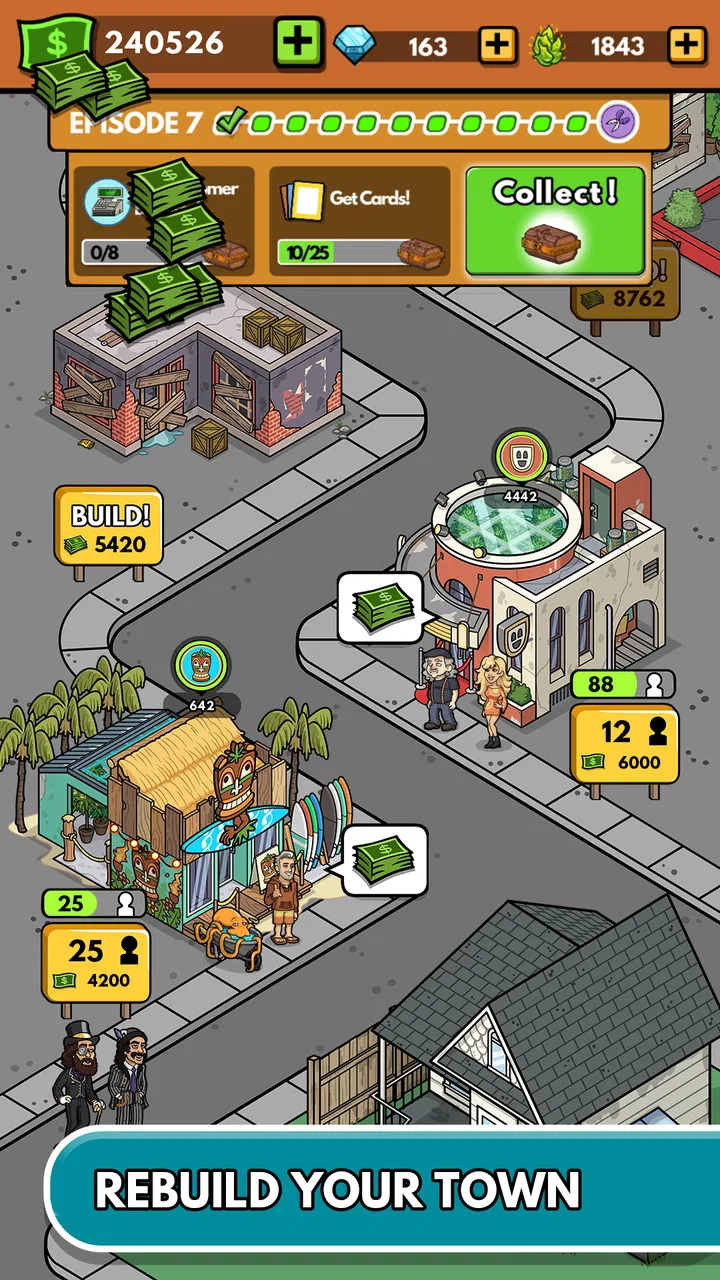
Cheech and Chong Bud Farm is a casual cannabis-themed management game based on the comedy duo’s characters and humor. You build and expand a growing operation, unlock new rooms and production options, complete objectives, and earn in-game currency while progressing through a lighthearted story. Its presentation is intentionally cartoonish and comedic rather than realistic.
02How do you play Cheech and Chong Bud Farm?
Gameplay focuses on tapping and managing different parts of your farm. You collect resources, improve production areas, hire or unlock helpers, and complete missions to advance. As your operation grows, upgrades help increase efficiency and unlock additional content. The controls are simple, making it easy to play in short sessions, although progress can become more dependent on waiting, repeated actions, or spending premium currency.
03Is Cheech and Chong Bud Farm free to download and play?
The game is generally free to download, but it may include optional in-app purchases and advertising. Players can usually progress without paying, although purchases can speed up timers, provide extra resources, or unlock certain conveniences. Before downloading, check the current store listing for the exact pricing, available purchase options, and any changes to the monetization system.
04Does Cheech and Chong Bud Farm require an internet connection?
An internet connection may be needed for important features such as saving progress, displaying advertisements, processing purchases, receiving events, or connecting with the game’s online services. Some basic activities might work temporarily offline, but the experience is more reliable when connected. If you plan to play while traveling, test offline access first because functionality can vary between updates and devices.
05Is Cheech and Chong Bud Farm suitable for children?
Cheech and Chong Bud Farm is aimed at a mature audience because its theme is centered on cannabis culture, and it may contain related jokes, references, suggestive humor, or advertising. Although the graphics are colorful and the management gameplay is easy to understand, parents should review the age rating and store information before allowing children to download it. In-app purchases and ad content should also be considered.
Pros
- Lighthearted Cheech and Chong humor gives the game a distinctive personality.
- Simple tap-and-upgrade gameplay is easy for casual players to understand.
- Many unlockable strains
- buildings
- and characters provide collection goals.
- Offline progress lets some production continue when you are away.
- Regular events can add variety and offer extra rewards to active players.
Cons
- Progress can become heavily dependent on waiting or spending premium currency.
- Frequent advertisements may interrupt play
- especially when claiming bonus rewards.
- The core production loop can feel repetitive after the initial upgrades.
- Some upgrades and content require substantial time or in-app purchases.
- The mature comedy and cannabis theme may not suit younger players or all audiences.

Cheech and Chong Bud Farm
Gallery